Amboseli National Park sits at the foot of Africa's highest mountain, and that setting alone would be enough to make it extraordinary. But Amboseli is far more than a pretty backdrop. Spread across 392 square kilometres of open savannah, seasonal wetlands, and ancient dried lake beds in southern Kenya, it is one of the continent's most rewarding safari destinations. Whether you are a first-time visitor or a seasoned Africa traveller, the park has a way of surprising you. Here are ten things you absolutely should not miss.
1. Watch Elephant Herds at Close Range
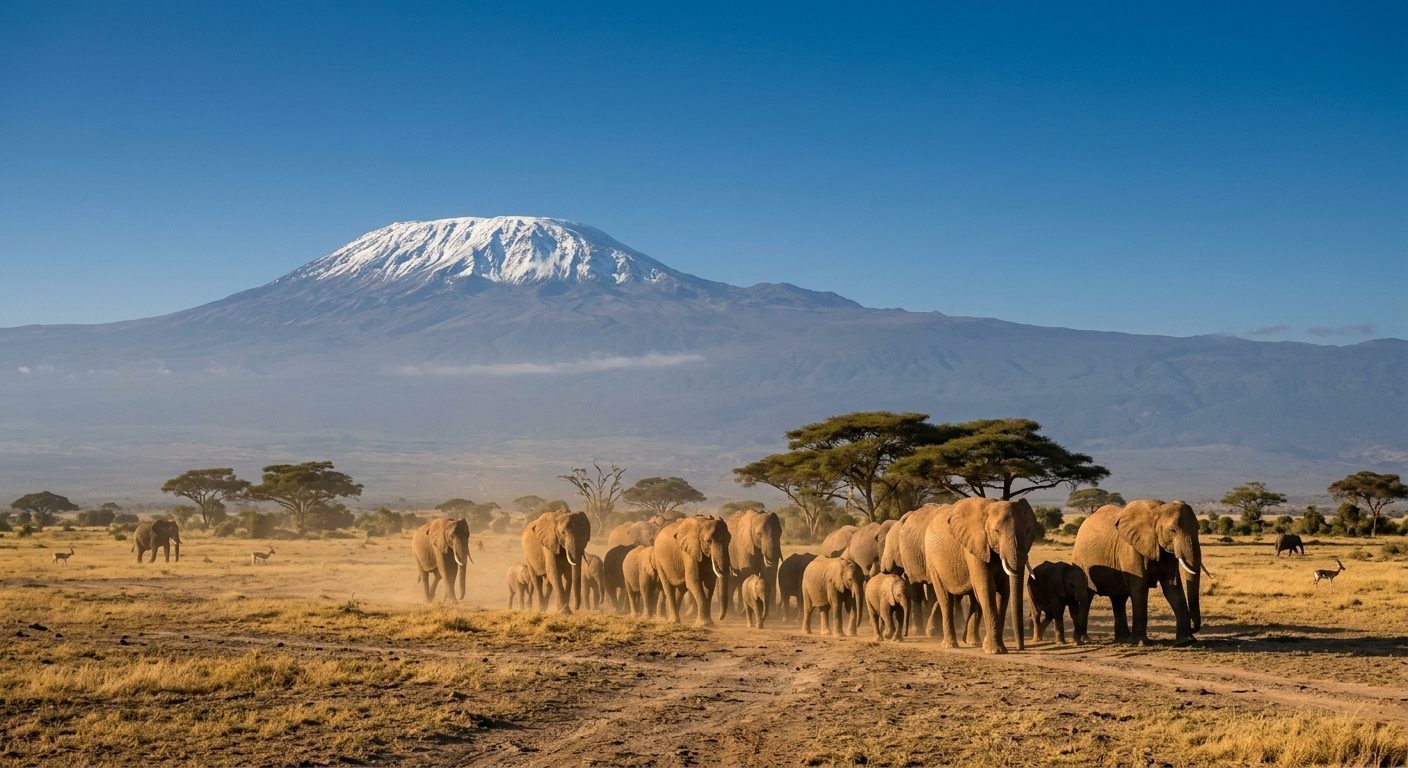
Amboseli is home to some of the largest and most studied elephant populations on earth, and encounters here are genuinely humbling. The park's open terrain means you can watch entire family groups — calves, matriarchs, bulls — move across the plains with almost nothing obscuring your view. The Amboseli elephants are remarkably relaxed around vehicles, so your guide can position the Land Cruiser close enough to hear them breathe. Early morning is prime time, when the herds emerge from the swamps and begin their daily march toward the plains. For the finest elephant sightings in Kenya, nowhere else comes close.
2. Photograph Kilimanjaro at Sunrise
The iconic image of African elephants silhouetted against a snow-capped Kilimanjaro was born in Amboseli, and for good reason. On clear mornings — most common between October and February — the mountain reveals itself in full, its glaciers glowing pink and orange as the sun climbs above the horizon. Position yourself near Observation Hill or the Enkongo Narok swamp before first light, and you will understand why photographers travel from every corner of the world to stand exactly where you are standing. Bring a long lens, patience, and a warm fleece — the pre-dawn air in Amboseli carries a genuine chill.
3. Take a Game Drive Through the Enkongo Narok Swamp
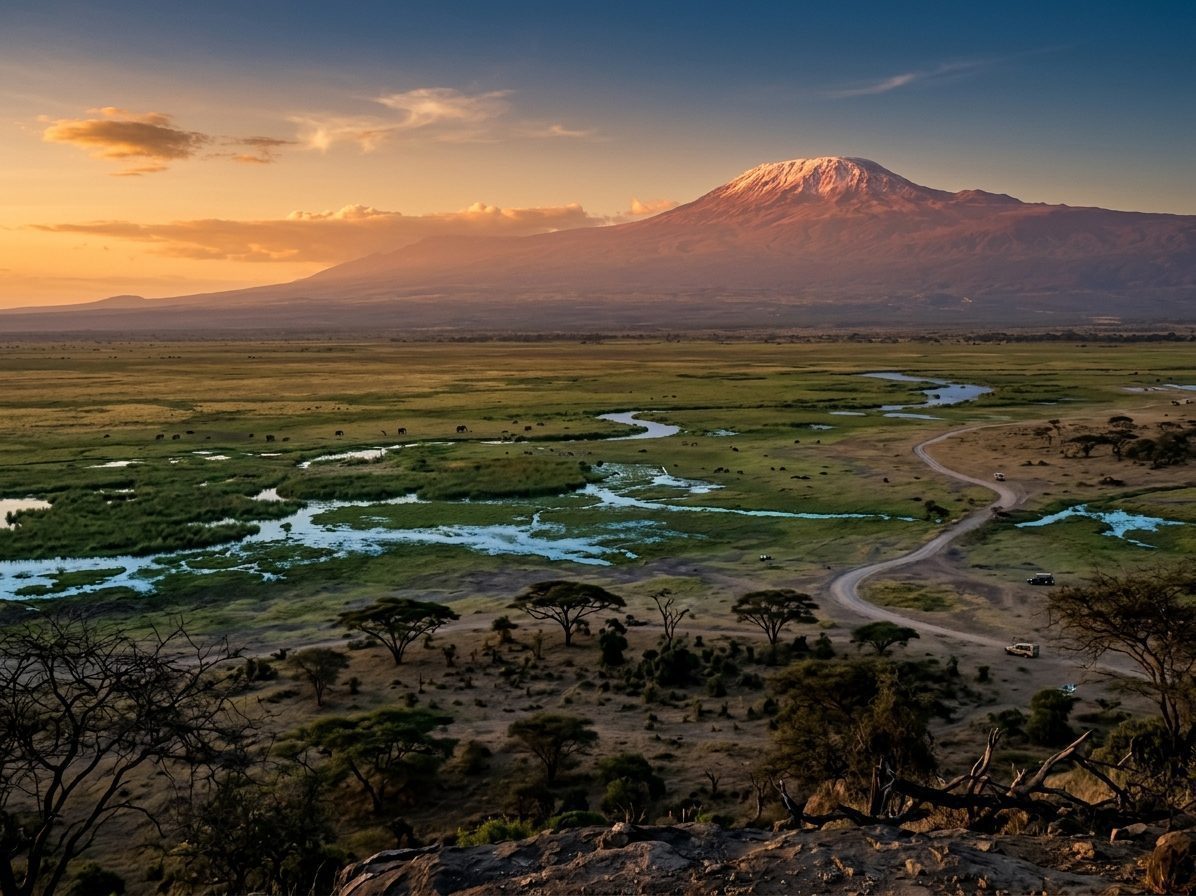
The Enkongo Narok and Longinye swamps are the beating heart of Amboseli, fed by underground streams that filter down from Kilimanjaro's snowmelt. These lush, papyrus-fringed waterways attract an extraordinary concentration of wildlife, including hippos, buffaloes, and vast flocks of waterbirds. Drive the tracks that skirt the swamp edges and you will likely encounter elephants wading chest-deep through the reeds, or a trio of lions sprawled in the shade of an acacia just metres from the water. It is a completely different visual texture to the open plains and one that makes Amboseli feel endlessly varied.
4. Climb Observation Hill for a Panoramic View
Observation Hill is one of the few places in Amboseli where you are permitted to leave your vehicle and stretch your legs, and the view from the top is worth every step of the short climb. From this elevated vantage point, the entire ecosystem unfolds below you — shimmering swamps, dust devils spiralling across the lake bed, animals moving in every direction, and Kilimanjaro commanding the southern horizon. It is also one of the best spots in the park for a sundowner. Ask your Wild Footprints guide to time your visit for the last hour of daylight, when the light turns amber and the landscape takes on an almost cinematic quality.
5. Spot the Big Cats
Amboseli's lion prides are well known and relatively easy to locate, particularly around the swamp margins where prey animals congregate. Cheetahs are perhaps even more thrilling here — the open terrain means you can watch an entire hunt unfold from start to finish, a wildlife experience that few other parks can offer with such clarity. Leopards are present too, though secretive and more often spotted along the Kitirua conservancy border in the early morning. Brief your guide on your big cat priorities before each drive, and they will plan the route accordingly.
6. Visit a Maasai Village
Amboseli sits in the heart of Maasai territory, and the relationship between the Maasai people and the wildlife of this ecosystem is ancient, complex, and deeply compelling. A visit to a traditional enkang — a Maasai homestead — offers genuine insight into a pastoral way of life that has existed alongside lions and elephants for centuries. Community members will demonstrate traditional dances, explain how the enkiama thorny enclosure protects their cattle at night, and describe how their land management practices directly benefit the park. It is the kind of cultural experience that stays with you long after you have returned home.
7. Enjoy a Bush Breakfast on the Plains
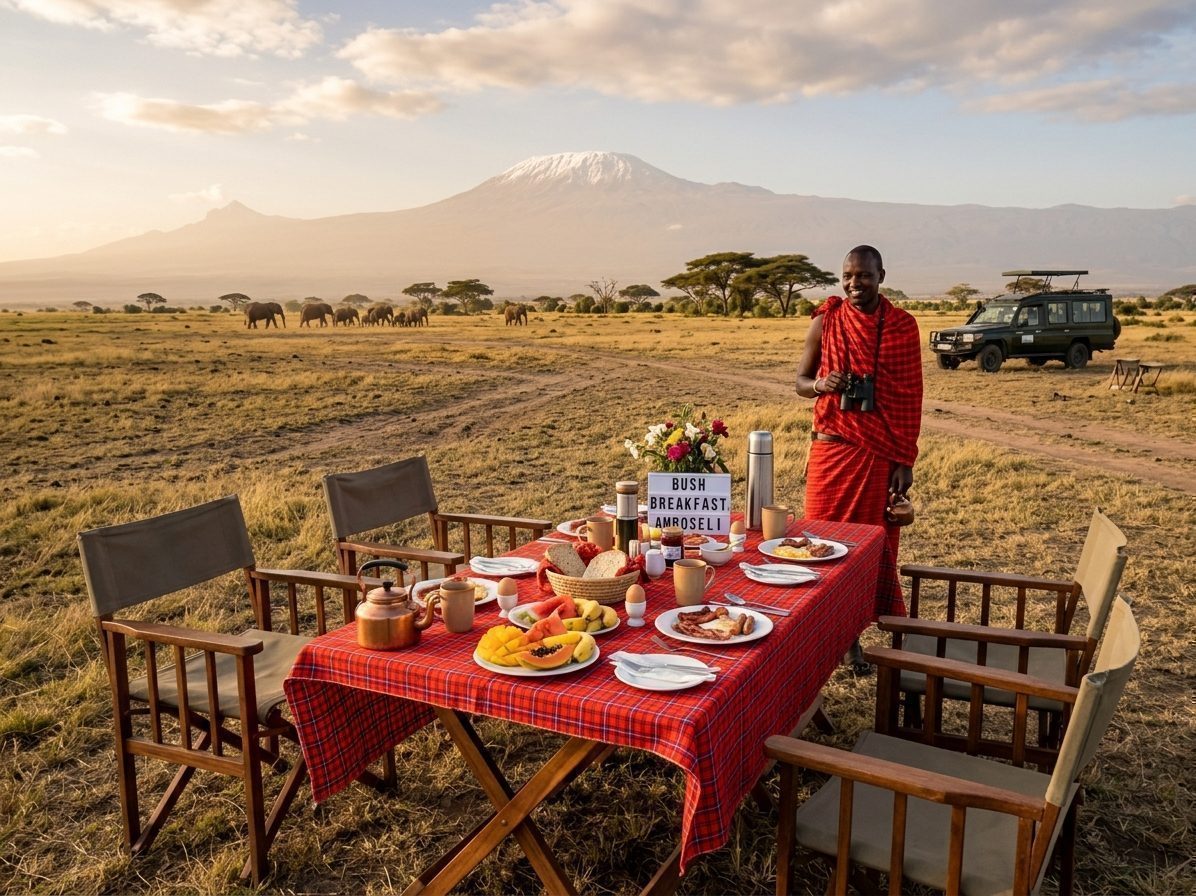
There are few pleasures in safari travel quite like a bush breakfast laid out under an open sky, with a herd of zebras grazing fifty metres away and a kettle quietly boiling on a camp stove. Several camps and lodges inside and around Amboseli offer this experience as part of their morning game drive package, and Wild Footprints can arrange it as part of your itinerary. Spread across a folding table with a thermos of Kenyan tea, fresh fruit, eggs, and toast, it is unhurried and deeply satisfying. The sounds of the bush replace every urban noise you have been carrying with you, and you feel, properly, that you are somewhere else entirely.
8. Go Birding Around the Wetlands
With over 600 bird species recorded, Amboseli is a serious birding destination that often surprises visitors who came primarily for the mammals. The swamp margins host African fish eagles, saddle-billed storks, yellow-billed storks, and enormous pelican flocks that wheel and crash-land with spectacular clumsiness. On the open plains, secretary birds stride purposefully through the grass while martial eagles scan from the tops of fever trees. Superb starlings, lilac-breasted rollers, and Von der Decken's hornbills add vivid colour to every stop. Ask for a birding checklist at your camp and keep it on the dashboard — you will be surprised how quickly it fills up.
9. Night Drives in the Amboseli Ecosystem
Game drives inside the national park are restricted to daylight hours, but several private conservancies bordering Amboseli — including Kimana and Selenkay — permit guided night drives. This opens up a completely different cast of characters: spring hares bounding like miniature kangaroos, porcupines rattling through the undergrowth, civets padding silently across the track, and occasionally a leopard caught in the spotlight, eyes burning amber. Night drives are available through specific camps and must be arranged in advance, so mention them to your Wild Footprints consultant when building your itinerary.
10. Simply Sit, Watch, and Let It Happen
The best safari advice anyone ever gave was this: switch off the urge to tick things off a list and just let Amboseli reveal itself at its own pace. Park beside a water hole and wait. Watch a young elephant calf try to figure out what to do with its trunk. Follow the slow progress of a breeding herd as it crosses the lake bed with Kilimanjaro behind it. These unhurried moments — quiet, patient, unheroic — are the ones that define a great safari and the ones you will return home talking about. Amboseli rewards presence more than any other park in Kenya, and that, in the end, is its greatest gift.